Rules and ethics
Part of Mapping the UK rules for social scheduling, with GDPR, DPA and PECR kept distinct
The separate UK legal questions behind a scheduled social post, from PECR to contracts
Understand the separate UK legal questions behind scheduled social content in England, from data and PECR to ads, rights, access and contracts.
Social media scheduling UK regulations are not a single licence or checklist. An England organisation must identify the communication, people, data, claim, asset, account and supplier involved, then apply the correct UK-wide or Great Britain rule to the facts. This article is general information, not legal advice or a compliance opinion.
What to take away
- Social media scheduling in the UK requires applying separate legal rules to the communication, people, data, claim, asset, account and supplier.
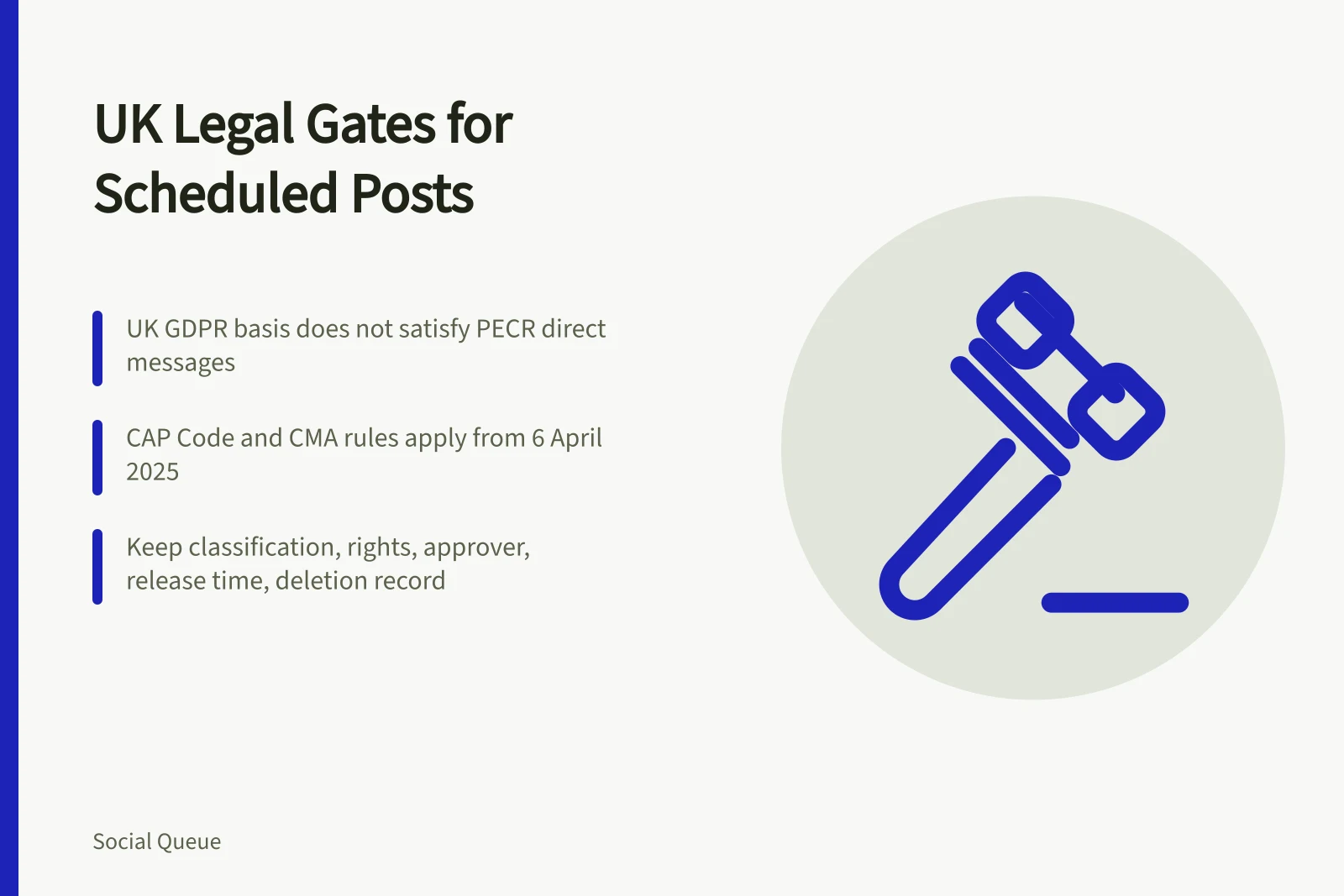
- A UK GDPR lawful basis does not automatically satisfy channel-specific PECR rules for direct messages.
- Advertising claims need review under the CAP Code and CMA guidance, with provisions applying from 6 April 2025.
- Copyright and other rights attach to the material itself, not to its scheduled state.
- Account security, accessibility, employment status, platform terms and supplier contracts are independent gates that must be checked.
Start with current sources and territorial scope
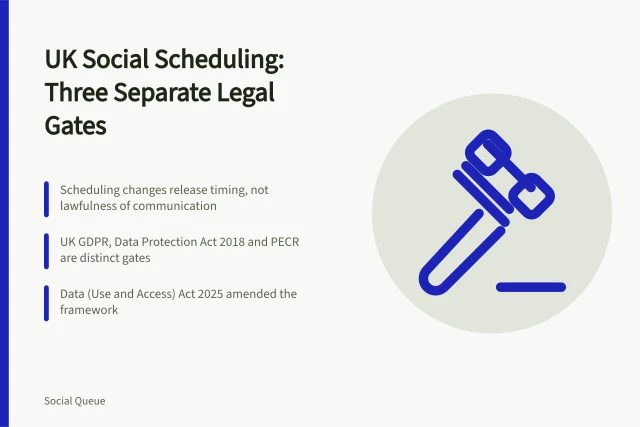
The Data (Use and Access) Act 2025 changed parts of the data-protection and electronic-communications framework. The ICO's direct-marketing guidance records an April 2026 commencement update. Recheck legislation, regulator guidance and commencement on publication day.
England may be the operational setting while a rule extends across the UK or Great Britain. The contracting entity, establishment, people targeted and place of processing can each matter. A platform's country setting does not resolve territorial scope.
Classify content before release
A public editorial notice, service message, advert, targeted advert and promotional direct message can use the same queue but raise different issues. The ICO's identification guidance explains that direct marketing can include promoting aims and ideals. Record the real purpose and audience selection rather than choosing a convenient label.
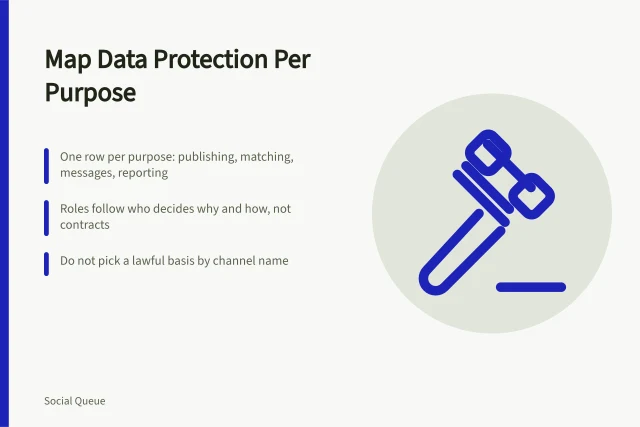
For personal information, the UK GDPR and Data Protection Act 2018 sit alongside the PECR 2003 text. A UK GDPR lawful basis does not automatically satisfy channel-specific PECR rules. Direct-message analysis should use the ICO's current electronic-mail marketing guidance for the actual recipient, sender and collection route.
Separate the remaining gates
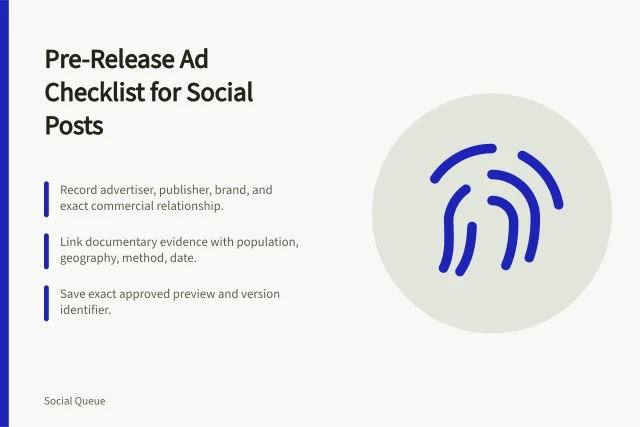
Advertising needs claim and disclosure review. The CAP Code recognition section covers identifiable marketing and commercial intent. Consumer-facing claims also require review under the CMA's unfair commercial practices guidance, which describes provisions applying from 6 April 2025.
Copyright and other rights attach to the material, not its scheduled state. The official copyright-use guide identifies permission, ownership and applicable exceptions as routes that may need investigation. Record the exact asset, licence, territory, media, edits and expiry.
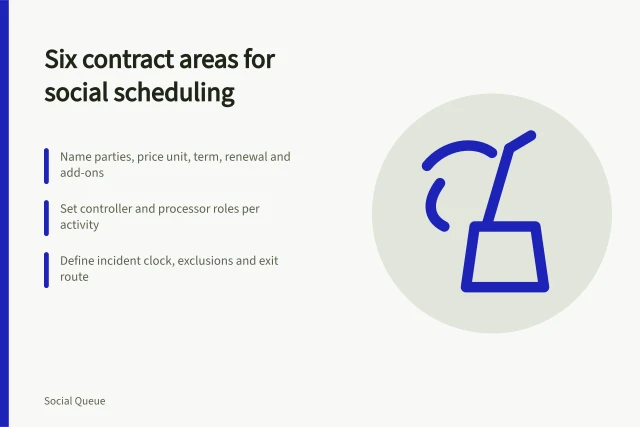
Account security, accessibility, employment status, platform terms and supplier contracts are independent. A tool may be technically capable but inaccessible, insecure, outside the approved contract or unsuitable for the intended communication. No score should compensate for a failed legal or safety gate.
Map the route after publication as well. State who monitors replies, complaints, objections, expired claims and mistaken releases. A public correction, deletion, direct response and suppression update are different actions with different evidence. Preserve the original approved version and what appeared without keeping personal information longer than the documented purpose requires.
If an agency or freelancer can publish, define their access, instruction, supervision and removal. Contract wording alone may not settle employment status, data roles or tax. Those areas require their own qualified review before access is granted.
Build a publication record
Keep the classification, source evidence, data map, specialist decisions, rights, final preview, approver, account, release time, timezone, monitoring, correction, objections, incidents and deletion action. Material changes return the item to review. If the applicable rule, guidance, targeting or supplier role is unclear, keep publication on hold and obtain fact-specific advice from qualified UK counsel.
Before you act
- Identify the communication, people, data, claim, asset, account and supplier involved.
- Classify content by real purpose and audience selection, not a convenient label.
- Check current legislation, regulator guidance and commencement on publication day.
- Review advertising claims under the CAP Code and CMA guidance.
- Record the exact asset, licence, territory, media, edits and expiry.
- Define agency or freelancer access, instruction, supervision and removal.
Common questions
Does a UK GDPR lawful basis cover direct-message marketing under PECR?
No. The article states that a UK GDPR lawful basis does not automatically satisfy channel-specific PECR rules. Direct-message analysis should use the ICO's current electronic-mail marketing guidance for the actual recipient, sender and collection route. So both regimes must be checked separately.
What should be recorded for copyright when scheduling a social post?
Record the exact asset, licence, territory, media, edits and expiry. Copyright and other rights attach to the material, not its scheduled state. The official copyright-use guide identifies permission, ownership and applicable exceptions as routes that may need investigation.
What should happen if the applicable rule, guidance, targeting or supplier role is unclear?
Keep publication on hold and obtain fact-specific advice from qualified UK counsel. The article says material changes return the item to review. If any of those elements is unclear, do not publish until you have qualified legal advice.