Strategy
Part of A social scheduling strategy that begins with a communication decision, not a calendar
Social media scheduling strategy: LinkedIn, YouTube or a manual post for one service update
Compare LinkedIn, YouTube, manual release and no-post routes for one England service update using common timing, evidence and control fields.
A social media scheduling channel strategy should compare routes for the same communication, not rank networks by audience size. This desk comparison uses one case: an England organisation has a verified operational update for people who already use an identified service. No reach, engagement or conversion is assumed.
What to take away
- Compare routes for one approved item rather than ranking networks by audience size.
- LinkedIn and YouTube evidence covers their own platforms only, not third-party tools or audience fit.
- The no-post route may suit an operational message sent through a controlled service channel.
- Test claim evidence, rights, accessibility, security, permission, correction and incident response separately.
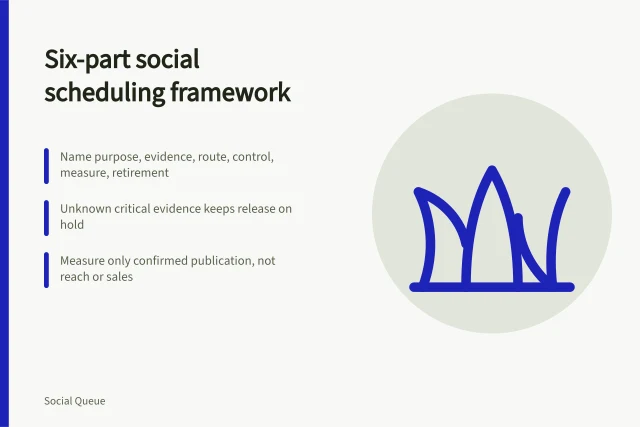
- If no route passes every critical gate, keep the service baseline and revise the plan.
Common criteria and units
Research was checked on 6 September 2026. The unit is one approved item, one owned account, one release window and one monitoring period. The routes are a LinkedIn Page post, a YouTube video, manual social release and no social post through the controlled service channel.
Route comparison by field
LinkedIn Page
- Exact item
- Page post
- Timing unit
- Scheduled post
- Role evidence
- Page admin
- Confirmation
- Platform record
- Accessibility
- Post and media
- Fallback
- Manual Page
YouTube
- Exact item
- Video upload
- Timing unit
- Scheduled time
- Role evidence
- Channel account
- Confirmation
- Publication record
- Accessibility
- Player captions
- Fallback
- Manual video
Manual release
- Exact item
- Platform-native item
- Timing unit
- Approved local time
- Role evidence
- Individual account
- Confirmation
- Observer event
- Accessibility
- Final output
- Fallback
- Service route
No social post
- Exact item
- Service route
- Timing unit
- Service timetable
- Role evidence
- Service owner
- Confirmation
- Delivery record
- Accessibility
- Channel output
- Fallback
- Baseline
LinkedIn Page
- Exact item
- supported Page post type
- Timing unit
- scheduled Page post inside current service window
- Role evidence
- eligible Page admin role
- Confirmation
- platform record to be tested
- Accessibility
- final post and media test
- Fallback
- manual Page release or service route
YouTube
- Exact item
- supported video upload
- Timing unit
- scheduled publication time with stated timezone
- Role evidence
- authorised channel account
- Confirmation
- publication record to be tested
- Accessibility
- player, captions and description test
- Fallback
- manual video release or service route
Manual social release
- Exact item
- platform-native item released by authorised person
- Timing unit
- approved local time and named releaser
- Role evidence
- individual account role
- Confirmation
- observer and platform event
- Accessibility
- final platform output test
- Fallback
- service route
No social post
- Exact item
- update through existing service route
- Timing unit
- service-channel timetable
- Role evidence
- service owner authority
- Confirmation
- service-delivery record
- Accessibility
- service-channel output test
- Fallback
- already the baseline
What first-party records establish
LinkedIn's current Page scheduling instructions describe eligible roles, a scheduling horizon and post types that cannot be scheduled. That evidence is specific to LinkedIn Pages. It does not prove third-party tool support or audience suitability.
YouTube's scheduled publication help describes selecting date, time and timezone and notes an account restriction linked to a Community Guidelines strike. It concerns video publishing, not a like-for-like text-post function.
The manual route still depends on current platform rules, individual access and someone being available. The no-post route may be preferable where an operational message must reach a known service population through a controlled channel. Social can supplement that route without becoming the sole critical path.
Apply independent gates
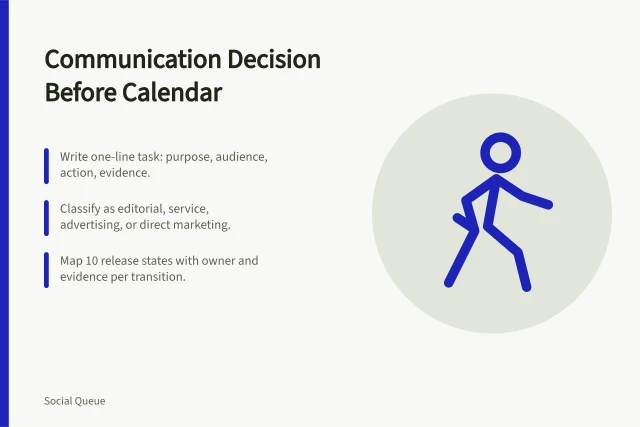
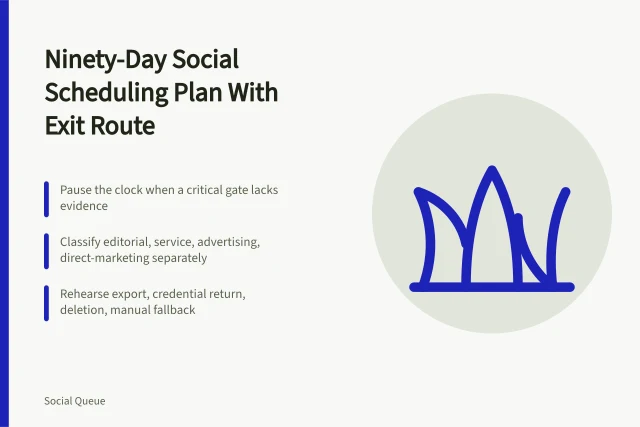
Classify editorial, service, advertising and direct-marketing aspects before release. The ICO's planning material for direct marketing shows why purpose, targeting and channel matter. A public post and a selected direct message do not receive one automatic answer.
Independent release gates
- Classify editorial, service, advertising and direct marketing
- Test claim evidence and rights
- Test accessibility and account security
- Test platform permission and correction
- Test incident response
- Record staff minutes per eligible item
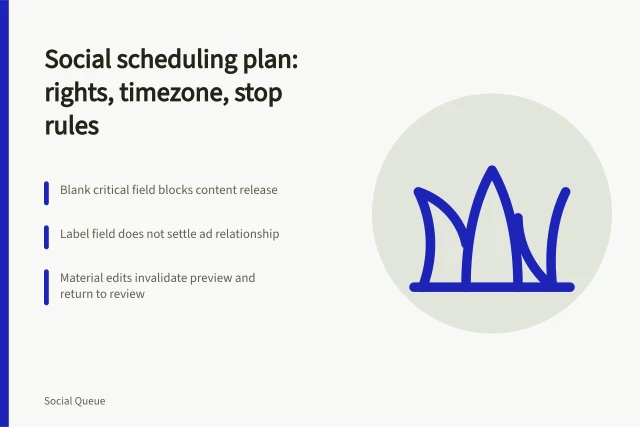
Test claim evidence, rights, accessibility, account security, platform permission, correction and incident response separately. Use the same synthetic fixture and record staff effort in minutes per eligible item over the stated test period. A route remains unknown until its exact output and recovery path have been observed.
Keep advertising review separate from direct-marketing analysis. The ASA's social-media ad recognition guidance addresses whether advertorial content is identifiable in context. That question can arise in a public Page post even where no recipient list is selected. A service update may instead need an operational owner who can prove that the intended population has another route if the platform fails.
When the comparison reaches cost, use the same number of eligible items and the same operating period. Record staff minutes, assurance work, platform administration, incident handling and supplier charges in their actual units. Do not compare a free account label with the full economic cost of another route.
Choose the route that reaches the defined population with acceptable evidence and controls. If no route passes every critical gate, retain the service baseline and revise the communication plan rather than averaging failures into a score.
Before you act
- Define the item, account, window and monitoring period.
- Check eligible roles and scheduling rules on each platform.
- Confirm accessibility for post media, captions and description.
- Separate advertising review from direct-marketing analysis.
- Record staff minutes and supplier charges in actual units.
- Keep the service baseline if no route passes every gate.
Common questions
Why not simply pick the network with the largest audience?
The article says a scheduling channel strategy should compare routes for the same communication, not rank networks by audience size. This desk comparison uses one case: an England organisation with a verified operational update for people who already use an identified service. No reach, engagement or conversion is assumed.
What does the LinkedIn scheduling evidence actually prove?
LinkedIn's current Page scheduling instructions describe eligible roles, a scheduling horizon and post types that cannot be scheduled. That evidence is specific to LinkedIn Pages. It does not prove third-party tool support or audience suitability, so it cannot settle the choice of route on its own.
How should cost be compared across routes?
Use the same number of eligible items and the same operating period. Record staff minutes, assurance work, platform administration, incident handling and supplier charges in their actual units. Do not compare a free account label with the full economic cost of another route.