Tools and providers
Part of LinkedIn scheduling tools for UK B2B teams: a buyer's guide
LinkedIn scheduling tools for UK B2B teams: a buyer's guide
UK B2B buyer's guide to LinkedIn scheduling tools, naming Hootsuite, Buffer, Sprout Social, Oktopost and SocialPilot, plus approval, pricing and data rules.
What to take away
- LinkedIn scheduling for B2B starts with the company page and the named approver, not the posting queue.
- Check that the tool publishes to LinkedIn Pages through the official API. Decline bulk posting to personal profiles.
- Employee advocacy needs a recorded opt-in from each colleague. The employer carries the data-protection duty.
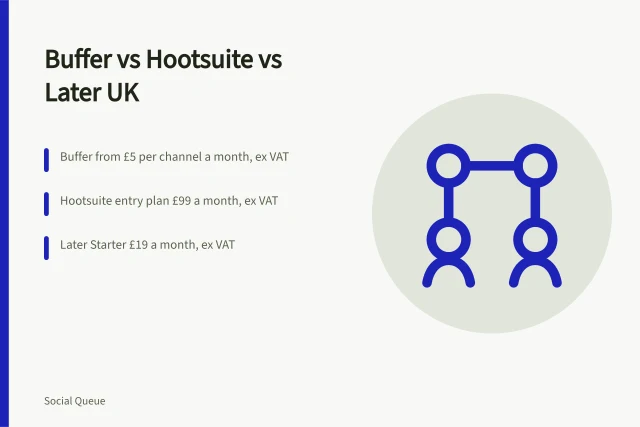
- Fix the pricing unit before comparing suppliers. Seat, account and usage models produce different annual totals.
- Name at least five tools against the same tests, not against a sales demo.
Begin with the page and the people
Most UK B2B teams schedule to one company page and a handful of named people. The page carries the brand, the publishing record and the follower list. The people carry reach and credibility, and they can leave.
That split shapes the purchase. A scheduler that handles only the company page is simpler to buy and to govern. One that also wants personal-profile access asks for credentials you should question.
Ask two questions in writing. Does the tool publish to organisation pages through the official LinkedIn API? What happens to a queued post when the connection lapses or the seat is removed? Solid answers here save a fortnight of trial.
Named tools to compare
These products are publicly sold for LinkedIn scheduling. Check current vendor terms, because features and prices change.
LinkedIn scheduling tools compared
Hootsuite
- LinkedIn scope
- Pages + profiles
- Pricing model
- Per seat
- Approval workflow
- Higher tiers
- Notable limit
- Advanced analytics higher tiers
Buffer
- LinkedIn scope
- Pages + profiles
- Pricing model
- Per channel
- Approval workflow
- Lighter trail
- Notable limit
- Lighter approval trail
Sprout Social
- LinkedIn scope
- Pages
- Pricing model
- Per seat
- Approval workflow
- Strong
- Notable limit
- Annual contracts common
Oktopost
- LinkedIn scope
- Pages
- Pricing model
- Quote-based
- Approval workflow
- B2B focus
- Notable limit
- Quote-based pricing
LinkedIn scope
- Hootsuite
- LinkedIn Pages and personal profiles through connected accounts
- Buffer
- LinkedIn Pages and personal profiles
- Sprout Social
- LinkedIn Pages
- Oktopost
- LinkedIn Pages
- SocialPilot
- LinkedIn Pages
- Sendible
- LinkedIn Pages
- Agorapulse
- LinkedIn Pages
Buying model and notable limit
- Hootsuite
- Per-seat plans; approval workflows and advanced analytics sit in higher tiers
- Buffer
- Per-channel pricing; simple scheduling, with a lighter approval trail than enterprise tools
- Sprout Social
- Per-seat enterprise pricing; strong approval and reporting, with annual contracts common
- Oktopost
- B2B focus and an employee advocacy module; quote-based pricing
- SocialPilot
- Per-account or per-user pricing; affordable for small teams, with fewer governance features
- Sendible
- Agency focus; per-user pricing; approval workflows and client dashboards
- Agorapulse
- Per-user pricing; shared calendar and approval workflow
What to put on the comparison sheet
Run every candidate through the same tests. Ask whether it publishes to LinkedIn Pages through the official API. Ask who approves a post and where the approved version lives. Ask how employee access is granted and revoked. Ask where drafts and lead lists are held. Ask what pricing unit you are billed for.
Comparison sheet tests
- Publishes to LinkedIn Pages via official API?
- Who approves a post and where?
- How is employee access granted and revoked?
- Where are drafts and lead lists held?
- What pricing unit are you billed for?
Approval records and the UK rules
A scheduling tool is a publishing system, so the approval record matters as much as the calendar. Store who approved what, when, and which version went live. A tool that overwrites an approved draft without a trace fails that test.
Approval and data chain
- Draft created
- Approved version stored with who and when
- Client sign-off inside the tool
- Publish and keep the record
- Retention and subject requests decided
Agency teams need client sign-off inside the tool, not in a separate email thread. Our guide to a social media approval workflow explains how to keep that chain intact when several people edit the same draft.
Scheduling also means holding personal data, even when the only data is a name and a profile link. The employer is the controller. The Data Protection Act 2018 is the statute that frames how that data may be processed.
Lawful basis, retention and subject requests are your decisions, not onboarding defaults. The ICO's UK GDPR guidance sets out what accountability looks like when a tool holds the record.
If the same tool sends direct messages to individuals, electronic marketing rules apply on top of the data-protection regime. A queued message is still a marketing decision, whatever the automation setting says.
What the licence costs
Most LinkedIn schedulers bill per seat, per connected social account, or by a usage band. Put every quote on one sheet: unit, minimum term, overage rule, and the cost of removing a seat. The monthly figure is rarely the annual one.
Costs also sit outside the subscription. Our breakdown of six hidden scheduling costs covers admin time, seat churn and the exit work that a renewals page will not mention.
Prices differ by tier. Hootsuite and Sprout Social often sit at the higher end. Buffer, SocialPilot and Publer often sit lower. Sendible and Agorapulse target agencies that need approvals.
A two-week trial that produces a decision
- Pick one company page and two employees who already post.
- Load a real fortnight of content, including one post that needs legal review before it goes out.
- Break something on purposerevoke a connection mid-queue, then edit an approved post and check whether the record changes.
- Time each step, from drafting to approval to publishing to reporting.
- Write the decisionkeep, fix with named conditions, or stop. Give it a date.
Anyone can queue a post. Fewer tools can prove who approved it and what changed afterwards.
Common questions
Does a scheduler replace the need for a person on LinkedIn?
No. Scheduling moves the publishing step, not the conversation. Comments, replies and direct messages still need a named owner, and slow replies cost more than late posts.
Can a tool post to employees' personal profiles?
Only where each member of staff connects their own account and can revoke that access. Bulk posting from stored credentials is the arrangement to avoid, because it breaks platform terms and gives you data you should not hold.
Is a lower-cost per-account plan enough for a B2B team?
It can be, if one person owns the page and the approval record lives elsewhere. It usually stops being enough when three people need to see, edit or approve the same post.
Do we need a data-protection impact assessment for LinkedIn scheduling?
Not always. A DPIA is required for high-risk processing; a company-page calendar with no lead lists rarely meets that bar. Add lead lists or profiling and the assessment becomes a sensible first step, not a paperwork exercise.